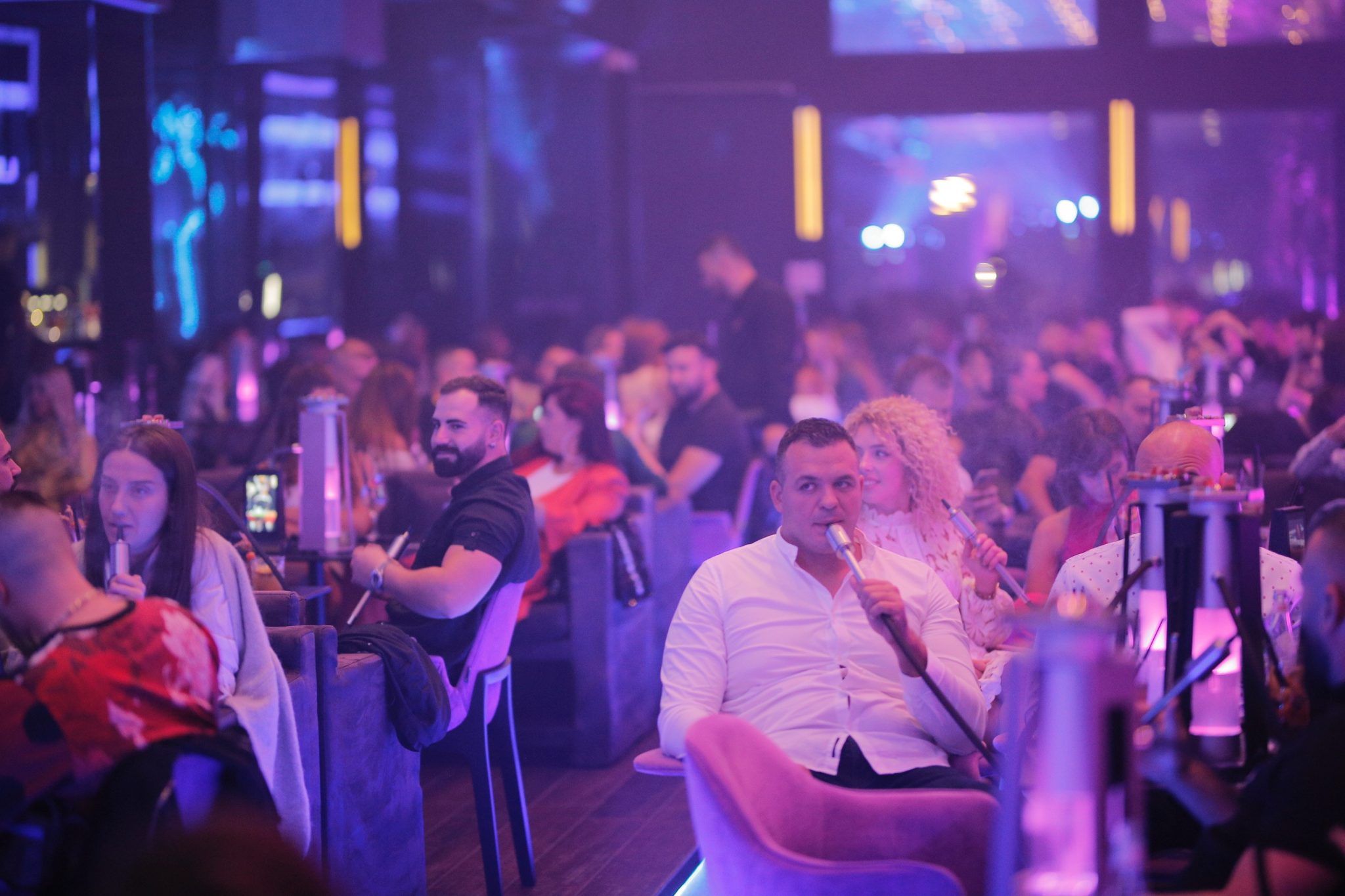
A procurement director for a Mayfair members’ club sat in front of a spreadsheet last March with twenty-three shisha pipe quotations and no clear way to compare them. Some were imported from Cairo workshops, some from German engineering firms, some from a Beirut workshop trading on a Damascus pedigree. The price band ranged from £180 to £4,200 a piece. The brand logic, if there was any, was opaque.
This is the state of the luxury shisha brands market in 2026: a genuine category has formed, but the buyer’s map of it has not. Hospitality teams, private collectors, and the architects who specify into both are deciding between names that did not exist as luxury brands a decade ago, and names that have been quietly making the same hand-engraved brass pipe in Cairo since the 1970s. The two are not directly comparable, and the right answer depends on the project. This guide explains who is who in the UK luxury shisha brands landscape in 2026, what each brand stands for, and how a buyer should think about choosing between them.
How a luxury shisha brand earns the name
The word “luxury” is doing a lot of work in this category, and not always honestly. Before the brand-by-brand notes, it helps to define the terms. A pipe earns the description on five things, and any brand that misses two or more of them is operating in a different segment.
- Materiality: the body, stem, and head are made from named, specified materials, not anonymous plated zinc. Stainless steel, solid brass, machined aluminium, borosilicate glass, ceramic – the brand should be willing to tell you what’s in the piece and why.
- Repairability: threads, gaskets, hoses, and head units are available as spare parts, and a piece bought today can be serviced in five years. Sealed-construction shishas are the opposite of luxury, regardless of finish.
- Design provenance: a real designer, atelier, or workshop is named. The piece carries an editorial point of view rather than a stock catalogue silhouette.
- Performance: the head unit manages charcoal heat, the seal holds without tape, and the smoke quality is tested rather than asserted. The luxury shisha is, before anything else, a working object.
- Service: the brand answers trade enquiries inside a working week, ships into the UK with a real warranty, and treats hospitality buyers as a category of customer rather than a series of one-offs.
Most of the names below clear three or four of those bars. A few clear all five. None is the right answer for every project.
Khalil Mamoon
The longest-running serious name in the category, and the only one that genuinely predates the modern luxury market. Khalil Mamoon’s workshop in Cairo has been turning brass pipes since 1797 by its own account, and its hand-engraved Egyptian-style shishas are the unofficial standard of reference for traditionalists. The pipes are heavy, ornate, and recognisable on sight. They are also slow to ship, idiosyncratic in finish, and unforgiving in service: the joinery is brass-on-brass, the gaskets are organic, and a piece in a busy bar will need attention far more often than a German-engineered alternative.
Khalil Mamoon is the right brand for a project that wants visible Egyptian craft heritage on a bar back, a private member club with a Cairo cocktail menu, or a collector building a reference library. It is the wrong brand for a five-star hotel that wants twenty-five identical pieces in service for ten years.
El-Badia
A Paris-based brand with the largest published luxury catalogue in the category, around a thousand references at any given time. El-Badia operates in the upper-mid range rather than the absolute top, and is the closest thing to a department store for luxury shisha. The selection runs from £200 stainless-and-glass entry pieces up to the £1,500 to £3,000 designer collaborations, with strong distribution into French, Spanish, and Italian hospitality.
El-Badia is a good first stop for a project that needs visual variety – several different finishes across a single venue, for instance – and for buyers who want an EU-side supplier with reliable shipping into the UK. It is less suited to procurement teams that want a single signature piece across a whole estate; the breadth that helps in choice can hurt in coherence.
Aladin (and the MVP line)
A German manufacturer with a long-standing reputation in the performance-shisha world and, more recently, in the luxury one. The MVP line is the relevant one for this guide: stainless steel, German-machined, modular, and engineered around clean draw and reliable seal. Aladin’s pipes are quiet design objects rather than statement pieces, and the brand sells on functional performance more than visual drama.
The MVP is the right choice for a hospitality buyer who cares about shisha-as-instrument first and aesthetic second: a hotel that wants the pipes to work flawlessly under nightly service rather than to be photographed for the brand book. UK distribution runs through specialist resellers; lead times are usually short.
Steamulation
Another German entrant, but at the technical extreme. Steamulation pipes are unmistakably German-engineered: anodised aluminium bodies, precision-threaded joinery, machined components that fit together like a piece of audio equipment. The brand’s approach is to treat the shisha as a serviceable system, with replaceable subassemblies and an extensive accessories catalogue.
For a private collector who values modular performance and an industrial-design aesthetic, Steamulation is the obvious choice. For hospitality, it is more of a specialist call: the modularity is a benefit if your team can train on it and a complication if they cannot.
MG Hookah
A UK-distributed brand that has carved out a contemporary middle ground between the Egyptian craft pipes and the German technical ones. The MG Chameleon and MG Panther models, sold through Shisha Goods in the UK, are the two pieces buyers will see most often on UK SERPs. The brand is younger than Khalil Mamoon and less expensive than Steamulation, and the design language is broadly contemporary – clean stems, restrained colour, glass bases.
MG is the right brand for a UK venue that wants something visibly current without going to the German engineering segment, and for buyers who value local distribution. UK lead times are generally good and post-sale service is straightforward.
Porsche Design
The shisha that sits on luxury hospitality SERPs more for its name than its volume. The 2.1 Shisha is a single-piece design statement: hand-blown glass, machined aluminium, an engineered base, and a price band that puts it in collector territory. Porsche Design’s involvement is genuinely industrial – the piece comes from the Stuttgart product-design studio rather than being a licensed name on someone else’s pipe.
Porsche Design’s strength is exactly what its weakness is: the brand-name halo. A buyer specifying a 2.1 into a residence is also specifying the visible association with Porsche Design’s wider object catalogue. For a hotel or member club that wants a non-obvious luxury piece, the association is loud. For a residence with the rest of the Porsche Design object family already in it, the association is the point.
Shika
A small-batch design-led brand from Israel-based industrial designer Ronen Bar Or. Shika pipes are recognisable for their architectural silhouette: thin metal stems, large unornamented glass bases, restrained colour. Production volume is low, lead times are longer than the German engineering brands, and the pieces feel closer to gallery objects than to hospitality fittings.
Shika is a collector’s brand more than a hospitality one. A specifier looking for one signature piece in a residential or yacht context will find a fit. A procurement team trying to outfit a whole bar will struggle on volume.
Innovade
Innovade is the brand we know best, because we are it. The company was founded in 2019 with a Munich-based product-design brief rather than a shisha merchant’s catalogue, and the result is a pipe that comes from the German industrial-design tradition more than the shisha-supply one. The current line is sold in three editions: BLACK, RED, and PINK. Each piece uses heat-resistant alloys, borosilicate glass, and a head unit that took about ten thousand pounds of metallurgy work to engineer on its own.
Innovade’s positioning sits between Steamulation and Porsche Design in practice: more design-led than the German performance brands, less brand-loaded than the fashion crossover. The intended customers are UK luxury hotels, resorts, bars, private member clubs, and discerning private buyers – typically buying in volumes from a single edition piece up to a small fleet for a venue. Trade enquiries are answered in person rather than through a reseller channel, which is part of the proposition for hospitality buyers who want direct conversations with the brand.
For anyone reading this guide who already knows Innovade, the relevant context is in the pillar piece on what makes a luxury shisha pipe and in the brand-story article. For anyone new to it, this guide is exactly the right place to find Innovade among the alternatives, and we would prefer that to any other introduction.
How to choose, by project type
The brand-by-brand notes above are not a ranking. The right answer is project-specific. A few common briefs:
- Five-star hotel, 20 to 100 pieces, ten-year service horizon: Aladin MVP, Steamulation, or Innovade. Choose on whether you want functional anonymity (Aladin), modular precision (Steamulation), or design-led editorial fit (Innovade).
- Private member club in Mayfair or Knightsbridge, 10 to 30 pieces: Innovade, MG Hookah, or El-Badia, depending on whether the club’s interior is contemporary, transitional, or eclectic.
- Boutique hotel or rooftop bar with an editorial brand: Innovade or Steamulation if the editorial is design-led; Khalil Mamoon if the editorial is craft heritage.
- Private residence, single statement piece: Porsche Design, Shika, or a specific edition of Innovade. The choice is largely about whether you want the wider brand association or not.
- Yacht or superyacht hospitality: Innovade or Steamulation, both for materials that hold up in salt-air conditions and for brands that will service a piece in transit.
- Collector with reference-library intent: Khalil Mamoon for the heritage anchor; Steamulation for the engineering anchor; Innovade or Porsche Design for the design-anchor; Shika or El-Badia for breadth.
UK procurement notes for trade buyers
Buying luxury shisha into the UK is straightforward for the European-manufactured brands and more involved for the Egyptian and Israeli ones. The variables a procurement team should plan around:
- Lead times: German brands (Aladin, Steamulation, Innovade) typically ship within 2 to 4 weeks for stock items and 6 to 10 weeks for custom or edition pieces. El-Badia is similar from France. Khalil Mamoon and Shika often run longer because production is small-batch.
- Customs and duty: imports from the EU (Germany, France) carry standard post-Brexit tariff treatment. Imports from Egypt or Israel have additional documentation; expect a forwarding agent to be involved.
- Spare parts: ask explicitly. The German and French brands will generally hold parts catalogues. The Egyptian workshops largely will not, and you will be sourcing replacement gaskets locally.
- Warranty: 12 to 24 months is standard for the European luxury brands. Heritage workshops are typically sold without formal warranty.
- Volume terms: hospitality MOQs and trade pricing are negotiated in person, not from a website. Expect to talk to a brand contact directly for orders of 10 pieces or more.
- Repair and refurbishment: ask whether the brand can refurbish a piece in service, or only replace components. The answer affects your ten-year cost more than the headline unit price.
What this guide deliberately does not cover
This is a guide to the brands a UK luxury hospitality or collector buyer will reasonably encounter. It does not cover the lower-tier mass-market brands available on Amazon and high-street vape shops, or the disposable bowl-and-base sets sold for home recreational use. Those are a different category with different criteria. It also does not cover flavour brands (Al Fakher, Adalya, Starbuzz) or charcoal brands; the right luxury shisha pipe is agnostic on what it is loaded with, and venue F&B teams choose flavours and coals separately on supply, taste, and event-specific factors.
Frequently asked questions
What is the price range for a luxury shisha pipe in the UK in 2026?
Roughly £200 to £5,000 for the catalogued pieces, with collector editions and customisations going higher. Most hospitality buyers specify into the £400 to £1,500 band per piece. Below £200, the pipe is not realistically a luxury object. Above £5,000, you are usually paying for an edition or a brand-name halo rather than a step change in materials or performance.
Which luxury shisha brand is best for a hotel buying multiple pieces?
Aladin MVP, Steamulation, and Innovade are the three most often specified into hospitality fleets. Aladin is the conservative choice on functional performance, Steamulation is the engineering-led choice, and Innovade is the design-led choice. All three will hold up under nightly service and will provide spare parts. The best brand depends on the venue’s editorial direction and the F&B team’s training capacity.
Are German luxury shisha brands really better than Egyptian ones?
They are different, not better. German brands lead on engineering, repeatability, and serviceability. Egyptian brands lead on heritage, hand craft, and visible provenance. A working Cairo workshop in 1797 is not replicable by any modern engineering firm; conversely, no traditional workshop can match the seal tolerance of a CNC-machined German piece. A serious collection often includes both.
Can I buy these brands directly, or do I have to go through a reseller?
It varies. Innovade, Khalil Mamoon, and Shika sell directly. Aladin, Steamulation, MG Hookah, and El-Badia sell predominantly through specialist resellers in the UK, although larger trade orders are usually negotiated direct with the brand. Porsche Design sells through its own retail channels.
How do I know whether a brand is genuinely luxury or just expensive?
The five tests at the top of this guide are the practical answer: materials, repairability, design provenance, tested performance, and trade-grade service. A brand that markets aggressively on price but cannot tell you what alloy the stem is made of, or whether parts are available, is not a luxury brand regardless of headline cost.
Which luxury shisha brand is best for a UK private member club?
Innovade, MG Hookah, and El-Badia are the three most commonly specified into UK private clubs. Innovade is the choice for clubs with a contemporary or design-led interior; MG Hookah for clubs that want a contemporary visual without going to the German engineering segment; El-Badia for clubs with eclectic or transitional interiors that want visual variety.
Is shisha service legal in UK hotels and bars in 2026?
Yes, with the same rules that apply to any combustible-tobacco service. Shisha must be served in a designated outdoor area or a structurally compliant outdoor enclosure, the venue must hold the relevant licences, and tobacco-display rules apply to product visible from outside. A specialist hospitality solicitor is the right first call for any venue specifying shisha service for the first time. The pipe brand has no bearing on the legal framework; the licensing applies regardless of the equipment.
Available from Innovade
Innovade BLACK, RED, and PINK editions are available for trade and private enquiry through the Innovade store. Hospitality buyers specifying volumes for hotels, bars, member clubs, or yacht service are welcome to contact us directly via the contact form on innovade.uk for trade pricing, lead times, and customisation options.
For more on the brand, see the Innovade story; for the wider category, see what makes a luxury shisha pipe and the rooftop-bar procurement guide.
