A shisha pipe does not usually justify six-figure research and development. The fact that one does, commissioned through a Munich product design studio in 2019, says more about how this category has changed in seven years than any product launch could.
This is the story of Innovade, the luxury shisha pipe brand that began from a product designer’s brief rather than a shisha merchant’s catalogue. It is also the story of a head unit, the metal bowl that sits between charcoal and tobacco, that required around £10,000 of engineering work on its own to solve a heat-management problem that traditional clay had quietly solved for a century.
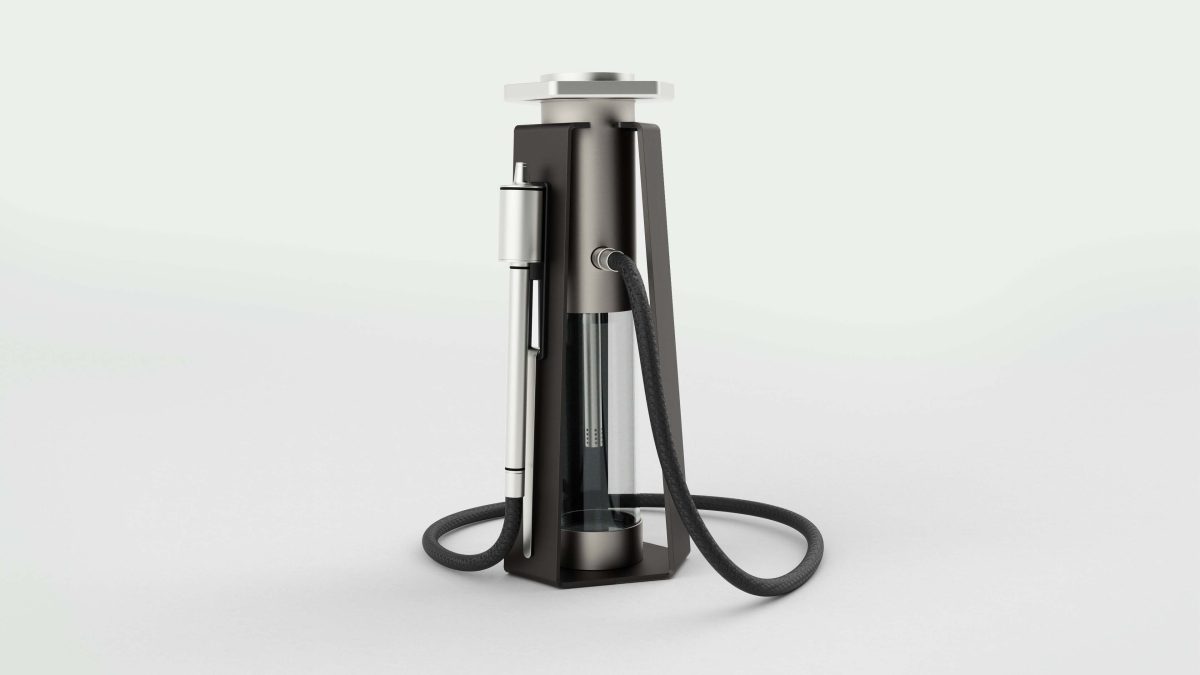
At a glance
- Designed in Germany in 2019, commissioned through a Munich product design studio.
- Over £100,000 spent on research and development before the first piece shipped.
- Approximately £10,000 of that R&D went on the head unit alone, resolving heat transfer between charcoal and flavour in metal instead of traditional clay.
- Specified materials: borosilicate laboratory glass, heat-resistant and heat-managing alloys, hand-finished metalwork.
- Standard production plus limited colour editions: BLACK, RED, PINK.
- Available for hospitality specification and private purchase across the UK, EU, and Middle East.
A shisha pipe, designed like a product
For most of its history, the shisha pipe has been a craft object rather than a designed one. Made in the workshops of Cairo, Damascus, and Istanbul, and later in factories across the Levant and China, it carried the visual language of the places that made it: turned brass, etched glass, painted detail, tassels. Its function was not in question because the tradition was unbroken. Its form was decorative because it was expected to be.
Innovade began from a different premise. In 2019 a Munich product design studio was commissioned to approach the category from first principles. The brief was to design a shisha pipe with the discipline usually applied to a piece of contract lighting or a professional kitchen tool: function as the starting point, materials chosen for behaviour rather than appearance, every visible element doing a job. No decoration for its own sake.
The studio that took the work sits in the German tradition of product design, not the tradition of decorative crafts. The outcome was closer to a piece of industrial equipment than to the shisha pipes it was replacing on the luxury hotel service trolley. That was the point.
The German design inheritance
Germany has shaped the modern luxury object more than any country in Europe. The thread runs through Bauhaus to Braun, through Vitsoe shelving to Leica cameras, through the studios of Jasper Morrison and Konstantin Grcic to the appliance designers still working out of Stuttgart, Munich, and Berlin today. The common principle, articulated most clearly by Dieter Rams in his ten principles of good design, is that a piece should be useful, honest, unobtrusive, and thorough down to the last detail.
Applied to a shisha pipe, this tradition reaches a different place than the ornamental register the category was born in. The silhouette gets simpler. The metalwork stops announcing itself. Proportions follow engineering requirements rather than visual preference. When the object works as it should, the design becomes invisible in the way a well-chosen floor lamp or a considered carafe becomes invisible. Dezeen has covered this shift in hospitality design repeatedly, as understatement has become a baseline expectation for luxury interiors in Northern Europe and now internationally.
Innovade is a product of that tradition. Its forms are legible, its materials are specified by function, and the object is intended to recede when not in use. A considered shisha pipe, like a considered floor lamp, should not be the loudest object in the room.
Materials, specified not sourced
The shift from craft to designed-object is most visible in the material decisions. A traditional shisha pipe is assembled from components that look premium: brass cast to shape, glass blown thick, a chrome-plated stem. The material language is sincere. The craftsman is not pretending. But it was not arrived at through engineering analysis.
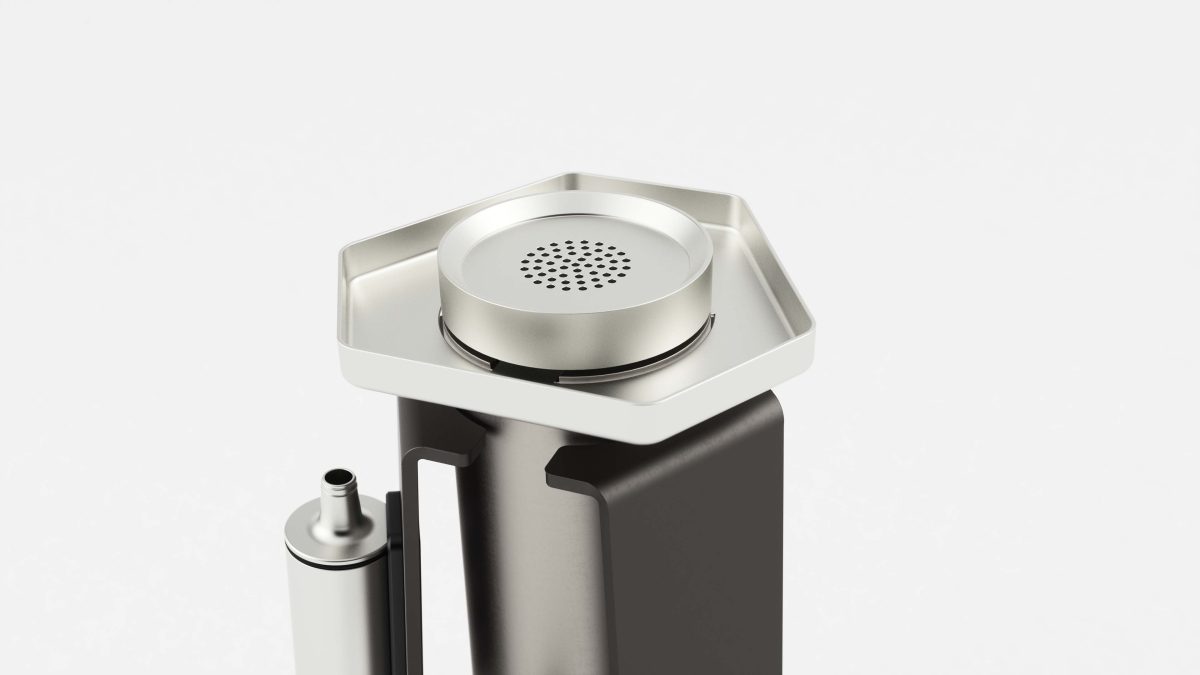
Innovade’s material brief was the opposite. Every component had to be specified for the behaviour it needed to deliver, not for the appearance of the material itself. The base is borosilicate glass, the same glass used in laboratory equipment and in precision lighting. It tolerates thermal shock without stress fractures, stays clear over years of cleaning cycles, and does not cloud. Hand-blown alternatives, sourced from German and Bohemian ateliers, sit at the top of the range for private commissions.
The metalwork is the engineering half of the object. Standard production uses heat-resistant, heat-managing alloys selected specifically for their thermal behaviour under the charcoal tray and along the smoke channel. These are specification metals, not decorative ones. A brass that looks correct but transfers heat inefficiently corrupts the flavour, overheats the tobacco, and shortens the life of the piece. Innovade’s spend on material research alone accounted for a substantial part of the project cost before the first unit was offered for sale.
Finishing is the last step, not the first. Surfaces are hand-finished after machining, which is why the final object reads as a product-design piece rather than a manufactured commodity. For the wider framework behind this shift in the category, read our pillar guide on what makes a luxury shisha pipe.
Ten thousand pounds on a head unit
The head unit, the metal bowl that holds the tobacco and sits directly under the charcoal, was the hardest part of the project. In a traditional shisha pipe this component is made of clay. Clay is forgiving: it absorbs heat, radiates it slowly, and buffers the tobacco from the charcoal’s direct temperature. A designer moving the category into metal does not inherit any of that forgiveness.
The Munich studio spent roughly £10,000 on head-unit research and development alone. The question was narrow and unglamorous: what metal, at what thickness, with what geometry on the underside, would manage heat between the charcoal and the shisha flavour with the same behaviour as traditional clay? Too thin and the tobacco burns. Too thick and the session stalls. Wrong alloy and the heat profile is uneven across the surface, cooking one side while the other stays cold.
The resolution came from iterating on three variables at once: metal choice (specific heat-resistant, heat-managing alloys rather than decorative brass or chrome-plate), wall thickness measured in tenths of a millimetre, and the form of the tobacco chamber. The finished head is the piece of the object that carries the most R&D cost, and paradoxically the piece the user looks at the least.
Across the full project, research and development exceeded £100,000 before the first Innovade luxury shisha shipped. That number matters not because R&D spend guarantees quality, but because it is the order of magnitude required to reach a material specification a product designer is willing to sign off on.
The editions: BLACK, RED, PINK
Once the standard piece was in production, Innovade began releasing limited colour editions. The colour runs were not arbitrary. Each edition took the same engineering base and tested the design language against a single chromatic decision.
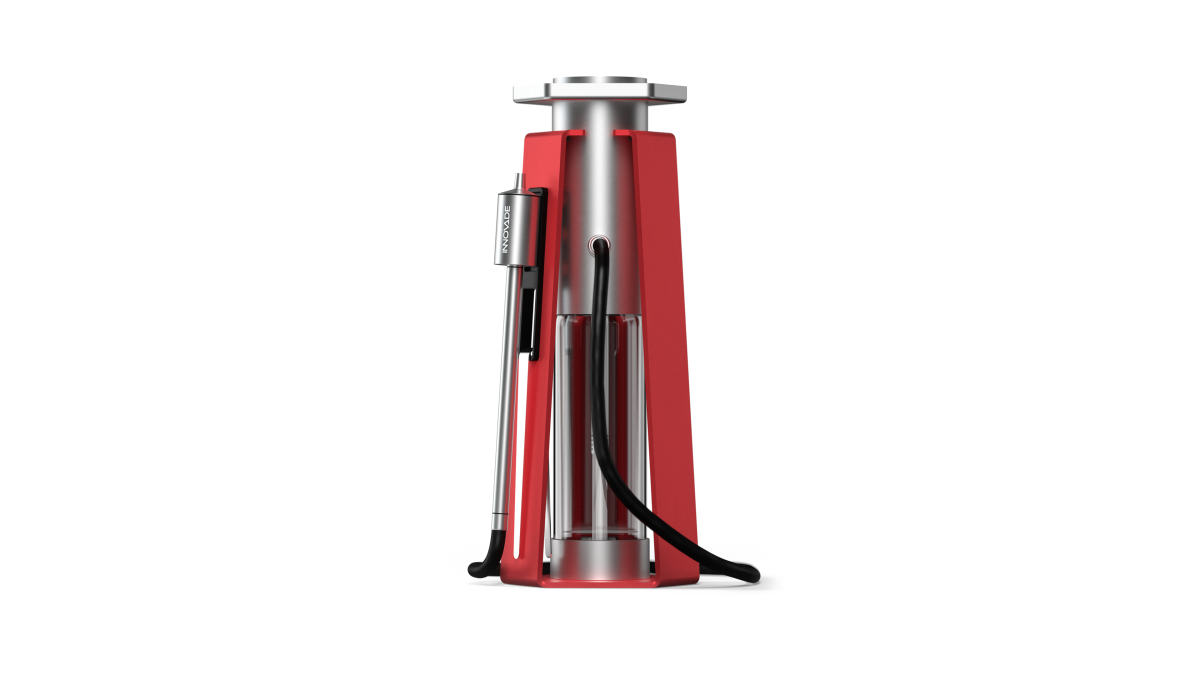
The first was INNOVADE PINK, released in 2020. Pink is difficult on a luxury object because it reads easily as decorative or gendered. Executed carefully, with a controlled saturation against a matte metal body, it held its place on the hotel service trolley and signalled that the brand would work in deliberate contrast as well as in restraint.
INNOVADE RED followed in 2021 as an anniversary edition. Red is the confident answer to the brand’s own minimalism: hot on sight, engineered cool in material. It became a reference piece for private residences and for bars where the shisha is intended to register as a design gesture rather than fade into the interior.
BLACK is the workhorse edition. It sits most comfortably in the hospitality settings where Innovade spends most of its working life: the five-star hotel lounge, the private member club library, the rooftop bar in Marbella or Dubai where the lighting is already turned down. It is the edition that does the most hours of actual service.
Each edition uses the same standard of glass, the same alloy specification, the same head unit engineered through the original R&D process. The colour is the variable. Everything below the surface is constant.
Where Innovade lives now
Seven years after the first piece shipped, Innovade is specified into luxury hospitality across three regions. The geography tells a story about who buys a designed object in this category, and why.
In the UK, the typical client is a private member club or a boutique hotel in Mayfair, Knightsbridge, or Chelsea, or a country house hotel adding a discreet amenity for returning guests. Orders run from ten to thirty pieces at a time, specified through the hotel’s interior design team during a refurbishment cycle. The reference points are quiet: a piece in the library, another in the courtyard, one for the presidential suite on request. See our note on how luxury hotels now curate shisha service for the procurement logic behind these specifications.
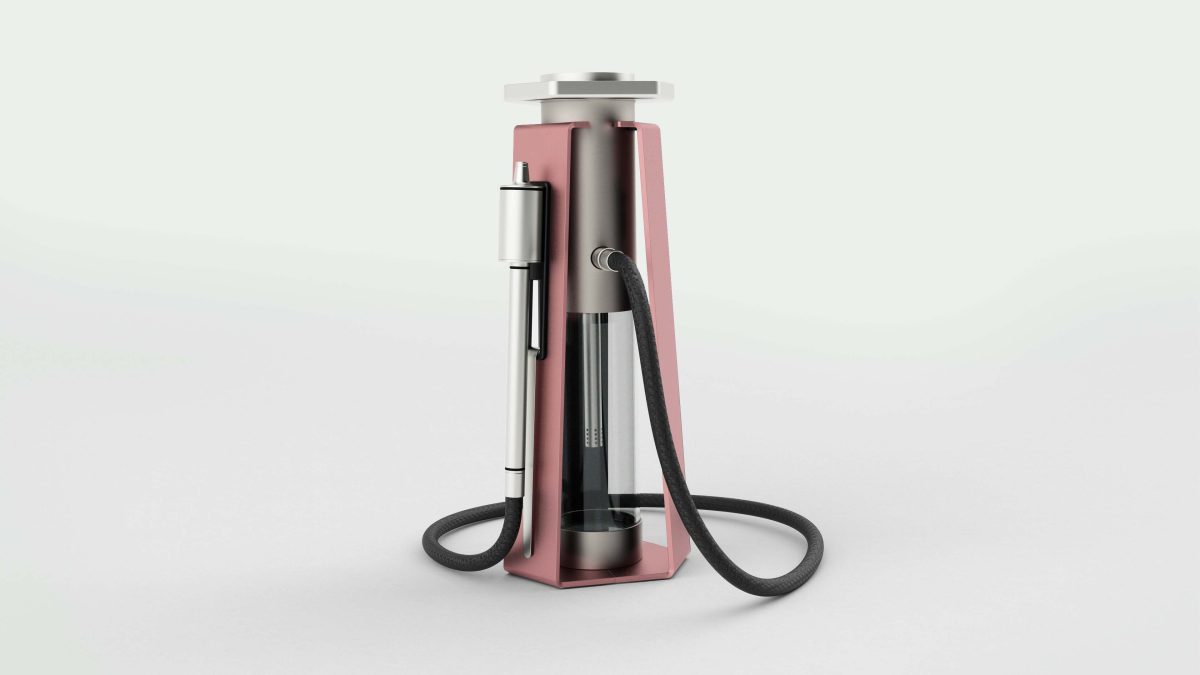
In continental Europe, the concentration is Monaco, Marbella, Ibiza, Athens, and Mykonos on the hospitality side, and Zurich, Munich, Hamburg, and Berlin on the design-led side. The rooftop bar and beach club market treats shisha as a summer-service amenity rather than a permanent fixture, which affects how the piece is ordered, stored, and maintained.
The Middle East is the largest single market for luxury shisha in revenue terms. Orders flow to Dubai, Abu Dhabi, Riyadh, Jeddah, Doha, Kuwait City, and Manama, usually through five-star hotels and private residences rather than clubs. GCC buyers expect immediate availability, white-glove delivery, and longer warranty terms, none of which is a problem when the object has been engineered correctly in the first place.
Procurement notes for trade buyers
For hospitality and contract buyers, the practical questions are lead times, customisation, warranty, and documentation.
Lead times: small orders (one to five pieces) ship within standard stock availability. Larger specifications, typical of a hotel refurbishment or a private member club roll-out, run on a scheduled production slot and lead times are confirmed at the point of specification. Customisation: colour runs, engraving, and matched-set specifications are available for contract orders. Variations outside the standard range carry minimum order quantities and price adjustments. Warranty: terms are confirmed with each specification and cover glass, metalwork, and fittings under normal service use. Shipping: EU, UK, and GCC shipping is routine; customs documentation is provided for orders outside the EU.
Venue-side procurement teams tend to ask two questions first. Will the piece stand up to daily service by staff who are not the original owners of the object? And will it hold its finish after two hundred hours of use? The answer to both is yes, but it rests on the engineering decisions described earlier rather than on finish quality alone. A heat-managed head unit, a laboratory-grade glass base, and a hand-finished metal body have a service profile that matches other contract-grade hospitality equipment. Our rooftop bar procurement guide covers the higher-volume service environment in detail.
What Innovade is not
Part of positioning a luxury object is clarifying what it is not. Innovade is not a piece of traditional shisha craftsmanship. It does not carry etched brass or painted glass. The brand is not built on heritage or provenance of the category. It does not target shisha lounges or the mid-market hookah retailer.
It is also not a luxury object by price tag alone. A decorative shisha pipe with a high price does not become a designed object because the figure is large. What makes Innovade a luxury piece is the engineering and material specification behind the surface, signed off by a product designer working to the standards of contract hospitality equipment rather than to the category’s own history. The price follows the work. The work does not follow the price.
In a category crowded with brands claiming design-first credentials, the distinguishing signals are narrow and verifiable: a named design origin (Germany, through a Munich studio), documented R&D at six figures, borosilicate glass, heat-managed alloy head units, and a consistent material language across standard and limited editions. Everything else is positioning language.
Available from Innovade
Innovade designs contemporary luxury shisha pipes in Germany for hospitality specification and private purchase. Enquiries from UK and European hotels, private member clubs, beach clubs, and residences are welcome, as are trade orders from five-star properties and residences across the GCC. For the design framework behind the category, read our pillar guide on what makes a luxury shisha pipe.
Frequently asked questions
Where is Innovade designed and made?
Innovade is designed in Germany, commissioned through a Munich product design studio in 2019. Production uses German and European supply partners, with materials specified for their thermal and mechanical behaviour rather than for decorative appearance.
Why was the head unit so difficult to engineer?
Traditional shisha uses a clay head, which manages heat gently between the charcoal and the tobacco. Moving to metal removes that natural buffer. The R&D spend on Innovade’s head, approximately £10,000, went on identifying the right heat-resistant alloy, the correct wall thickness, and the chamber geometry needed to match clay’s forgiveness without its drawbacks.
What materials are used in an Innovade shisha pipe?
The base is borosilicate laboratory-grade glass. The metalwork uses heat-resistant, heat-managing alloys selected for their behaviour under charcoal rather than for their appearance. Finishing is applied by hand after machining.
Is Innovade available for luxury hotel procurement?
Yes. Innovade specifies into five-star hotels, private member clubs, beach clubs, and superyacht projects across the UK, EU, and Middle East. Order quantities, lead times, and warranty terms are confirmed at the point of specification.
Does Innovade offer customisation for contract orders?
Customisation is available for contract orders, including colour runs, engraving, and matched sets for multi-piece specifications. Minimum order quantities and cost adjustments apply for non-standard work.
Where does Innovade ship?
The brand ships to the UK, EU, and GCC markets directly from German production. Customs documentation is provided for orders outside the EU. Lead times are confirmed with each order.
How is Innovade different from other luxury shisha brands?
The distinguishing signals are a documented German design origin, R&D spending in excess of £100,000 before the first piece shipped, a laboratory-grade glass specification, and engineered-alloy metalwork. The positioning is product-design-led rather than decoration-led.
Innovade’s story is the category’s story in miniature. The shisha pipe has been a craft object for more than a thousand years; it becomes a luxury design object only when someone is willing to approach it with the discipline product designers apply to the rest of the hospitality environment. For the broader shift in what luxury now means in this category, read What Makes a Luxury Shisha Pipe – A Design-First Perspective.
